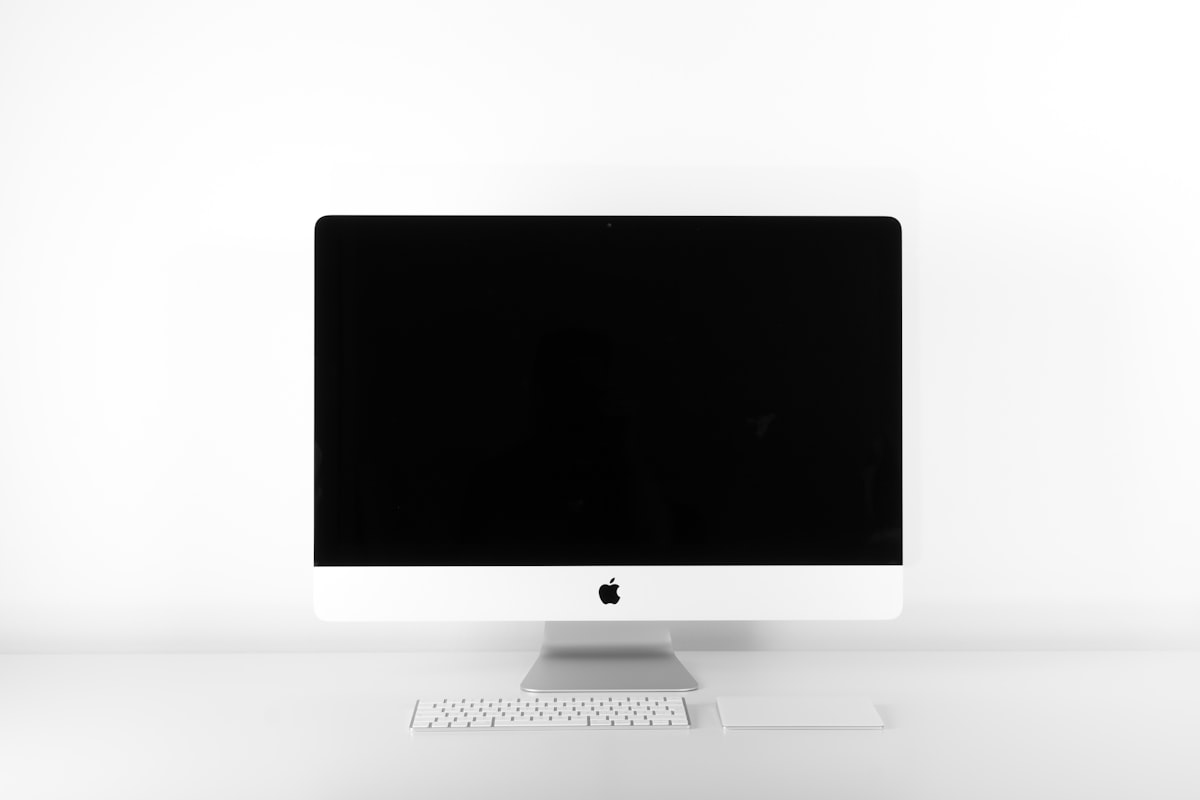
Best Monitor Size for Work From Home: 2024 Guide
This article contains affiliate links. If you make a purchase through these links, we may earn a small commission at no extra cost to you. This helps support our site and allows us to continue creating helpful content.
Table of Contents
- Quick Picks
- How We Evaluated
- Best Monitor Sizes for Work From Home
- Monitor Size Comparison
- What to Look for When Choosing Monitor Size
- Frequently Asked Questions
Finding the best monitor size for work from home isn’t just about buying the biggest screen your budget allows. The right size depends on your desk space, viewing distance, work type, and personal preferences. Too small and you’ll strain your eyes switching between windows. Too large and you’ll get neck fatigue from constantly turning your head.
After testing dozens of monitors in real home office setups, we’ve identified the sweet spots that maximize productivity without sacrificing comfort.
Quick Picks
- 24-inch: Dell P2422H - Perfect for small desks and basic productivity tasks
- 27-inch: LG 27UP850-W - The goldilocks size for most remote workers
- 32-inch: Samsung M8 - Ideal for creative work and multitasking power users
- 34-inch ultrawide: Dell U3423WE - Best for data analysis and coding with multiple windows
- 43-inch: LG 43UN700-B - Ultimate multitasking for those with deep desks
How We Evaluated
We tested monitors across different sizes in real work-from-home environments, focusing on productivity impact, eye strain levels, and desk space requirements. Our evaluation considered viewing distance comfort, text clarity, window management efficiency, and long-term usability for 8+ hour workdays.
Best Monitor Sizes for Work From Home
24-Inch: Dell P2422H - Best for Compact Spaces
Key Specs:
- Resolution: 1920 x 1080 (Full HD)
- Panel Type: IPS
- Refresh Rate: 60Hz
- Ports: HDMI, DisplayPort, VGA, USB hub
- Price Range: $200-300
The Dell P2422H represents the practical minimum for productive home office work. At 24 inches, it provides enough screen real estate for essential tasks without overwhelming small desk setups.
This size works perfectly for standard office applications, web browsing, and video calls. The 1080p resolution delivers crisp text at normal viewing distances (18-24 inches), and you can comfortably fit two windows side by side for basic multitasking.
The main limitation is the restricted workspace for complex projects. Creative professionals and data analysts will quickly feel cramped, but for general administrative work, customer service, or writing, 24 inches hits the efficiency sweet spot without breaking the bank or dominating your desk.
27-Inch: LG 27UP850-W - The Goldilocks Size
Key Specs:
- Resolution: 2560 x 1440 (QHD)
- Panel Type: IPS with 99% sRGB coverage
- Refresh Rate: 60Hz
- Ports: USB-C with 90W power delivery, HDMI, DisplayPort
- Height adjustable stand included
- Price Range: $400-500
The LG 27UP850-W exemplifies why 27 inches has become the standard recommendation for remote work. This size provides the optimal balance between screen real estate and comfortable viewing without requiring excessive desk depth.
At 27 inches with 1440p resolution, text remains razor-sharp while giving you significantly more workspace than 24-inch alternatives. You can easily manage three windows simultaneously or work with detailed spreadsheets without constant scrolling. The USB-C connectivity simplifies laptop connections, charging your device while providing display and data transfer through a single cable.
The only consideration is desk space – you’ll want at least 30 inches of depth to maintain the ideal 24-30 inch viewing distance. For 90% of remote workers, this size delivers maximum productivity gains without the downsides of larger displays.
32-Inch: Samsung M8 - Best for Creative and Multitasking Work
Key Specs:
- Resolution: 3840 x 2160 (4K UHD)
- Panel Type: VA with HDR10+ support
- Built-in smart TV features and webcam
- Wireless DeX and AirPlay support
- Adjustable stand with portrait mode
- Price Range: $600-800
The Samsung M8 transforms your workspace into a productivity powerhouse. At 32 inches with 4K resolution, you get four times the pixel density of 1080p displays, making text incredibly sharp even at larger sizes.
This monitor excels for creative professionals working with high-resolution images, video editing, or detailed design work. The screen space accommodates four full-size windows comfortably, eliminating the constant window switching that hampers productivity. The smart features add versatility – you can attend video calls using the built-in webcam or stream content during breaks without connecting additional devices.
The trade-offs include higher cost and significant desk space requirements. You’ll need a deep desk (36+ inches) to maintain comfortable viewing distance, and some users experience neck fatigue initially when adapting from smaller screens. However, for power users who spend long hours multitasking, the productivity gains justify the investment.
34-Inch Ultrawide: Dell U3423WE - Best for Data Analysis and Coding
Key Specs:
- Resolution: 3440 x 1440 (21:9 aspect ratio)
- Panel Type: IPS with 99% sRGB, 95% DCI-P3
- Refresh Rate: 60Hz
- Ports: USB-C with 90W power delivery, HDMI, DisplayPort
- KVM switch functionality
- Price Range: $800-1000
The Dell U3423WE revolutionizes workflow for professionals who work with multiple applications simultaneously. The ultrawide format provides the equivalent of two 27-inch monitors without the center bezel interruption.
This setup particularly benefits developers, financial analysts, and researchers who need to reference multiple documents or data streams. You can have your code editor, browser, terminal, and documentation open simultaneously at readable sizes. The curved design reduces eye movement and creates a more immersive work environment.
The learning curve involves adjusting to the wider field of view, and some applications don’t optimize well for ultrawide aspect ratios. Video calls may appear stretched unless you use window management tools. Despite these minor issues, professionals who embrace ultrawide typically report significant productivity improvements and refuse to return to traditional aspect ratios.
43-Inch: LG 43UN700-B - Ultimate Multitasking for Deep Desks
Key Specs:
- Resolution: 3840 x 2160 (4K UHD)
- Panel Type: IPS with HDR10 support
- Picture-by-Picture and Picture-in-Picture modes
- Multiple input options with KVM switch
- USB-C connectivity with power delivery
- Price Range: $500-700
The LG 43UN700-B represents the extreme end of work-from-home monitor sizing. At 43 inches, it’s essentially like having four 21.5-inch monitors arranged in a 2x2 grid, providing unprecedented workspace for complex projects.
This size excels for professionals managing multiple data streams, trading platforms, or complex project management workflows. The picture-by-picture functionality lets you display inputs from different sources simultaneously, perfect for monitoring various systems or collaborating across multiple devices.
The challenges are substantial: you need a very deep desk (40+ inches minimum), strong graphics card capabilities, and time to adapt to the larger display. Many users initially experience decision paralysis with so much screen space. However, for specific use cases like financial trading, security monitoring, or large-scale project management, the productivity gains can be transformative.
Monitor Size Comparison
| Size | Resolution | Ideal Viewing Distance | Desk Depth Needed | Best For | Price Range |
|---|---|---|---|---|---|
| 24" | 1920x1080 | 18-24" | 24" | Basic productivity, small spaces | $200-400 |
| 27" | 2560x1440 | 24-30" | 30" | General office work, balanced setup | $400-600 |
| 32" | 3840x2160 | 30-36" | 36" | Creative work, heavy multitasking | $600-1000 |
| 34" UW | 3440x1440 | 30-36" | 36" | Development, data analysis | $800-1200 |
| 43" | 3840x2160 | 36-48" | 40" | Extreme multitasking, specialized work | $500-800 |
What to Look for When Choosing Monitor Size
Viewing Distance and Desk Space
Your desk depth determines the maximum comfortable monitor size. Sit too close to a large display and you’ll strain your neck constantly looking up and down. The general rule: your viewing distance should be 1.5-2 times the screen width for optimal comfort.
Measure your desk depth and subtract 6-8 inches for keyboard space. The remaining distance determines your maximum comfortable screen size without requiring furniture rearrangement.
Resolution and Pixel Density
Larger monitors require higher resolutions to maintain sharp text and images. A 32-inch 1080p monitor will show pixelation, while a 24-inch 1080p display looks crisp. Aim for these minimum resolutions by size: 24" (1080p), 27" (1440p), 32" (4K), and ultrawide (1440p minimum).
Higher pixel density also affects text scaling. 4K monitors often require 150-200% scaling in Windows or macOS, which some applications handle poorly. Test compatibility with your essential software before committing to ultra-high-resolution displays.
Work Type and Application Requirements
Consider your primary work applications when selecting size. Spreadsheet users benefit from larger displays that show more rows and columns. Writers might prefer moderate sizes that reduce distractions. Developers love ultrawide monitors for side-by-side code comparison.
Video editors and graphic designers need color-accurate displays with specific color gamut coverage, often making panel quality more important than size alone.
Ergonomics and Health Considerations
Larger monitors can cause neck and eye strain if not positioned correctly. The top of your screen should be at or below eye level, and the display should be perpendicular to windows to minimize glare.
Consider adjustable stands or monitor arms for larger displays. Fixed stands often don’t provide adequate height adjustment, leading to poor posture during long work sessions.
Budget and Future-Proofing
Larger monitors cost significantly more, but they also last longer before feeling outdated. A quality 27-inch 1440p monitor provides 5-7 years of productive use, while a 24-inch 1080p display might feel limiting within 2-3 years.
Factor in the total cost including necessary accessories like adjustable stands, cables, and potential graphics card upgrades for 4K displays.
Frequently Asked Questions
What’s the best monitor size for most remote workers?
27 inches with 1440p resolution offers the optimal balance for most home office setups. It provides significant productivity benefits over smaller displays while remaining comfortable for 8+ hour work sessions. This size fits on most desks and doesn’t require expensive graphics card upgrades.
Is a 32-inch monitor too big for office work?
A 32-inch monitor isn’t too big if you have adequate desk space and proper positioning. You’ll need at least 36 inches of desk depth and should position the display 30-36 inches from your eyes. Many professionals find the extra screen real estate transformative for multitasking, though there’s a brief adaptation period.
Should I get one large monitor or two smaller ones?
One large monitor (32" or ultrawide) provides seamless window management and eliminates the center bezel gap, making it better for tasks requiring continuous visual flow. Dual monitors offer more flexibility for different applications and can be more cost-effective. Choose based on whether you prioritize seamless workflows or application separation.
How far should I sit from different monitor sizes?
Follow the 1.5-2x screen width rule: 24" monitors need 18-24" viewing distance, 27" monitors need 24-30", and 32" monitors require 30-36". Ultrawide monitors also need 30-36" due to their width. Proper distance prevents eye strain and reduces the need for excessive head movement.
Do I need 4K resolution for work from home?
4K resolution becomes beneficial at 27 inches and larger, providing sharper text and images. For productivity work, 1440p on 27" monitors often provides the best balance of clarity and performance. 4K is essential for creative work involving high-resolution images or video, but may be overkill for basic office applications.
Can my laptop handle a large external monitor?
Most modern laptops can drive 4K displays at 60Hz through USB-C or HDMI connections. Check your laptop’s specifications for maximum supported resolution and refresh rate. Older or lower-end laptops might struggle with 4K displays, causing performance issues during intensive tasks. Consider your laptop’s graphics capabilities when choosing monitor size and resolution.
The best monitor size for work from home ultimately depends on your specific needs, workspace, and work style. For most remote workers, a 27-inch 1440p display provides the sweet spot of productivity and comfort. Those with limited space should consider 24-inch options, while power users and creative professionals will benefit from 32-inch or ultrawide alternatives.
Remember that monitor size is just one factor in creating an effective home office. Proper positioning, adequate lighting, and ergonomic accessories are equally important for maintaining productivity and health during long work sessions. Take time to evaluate your specific needs and test different sizes when possible before making your investment.