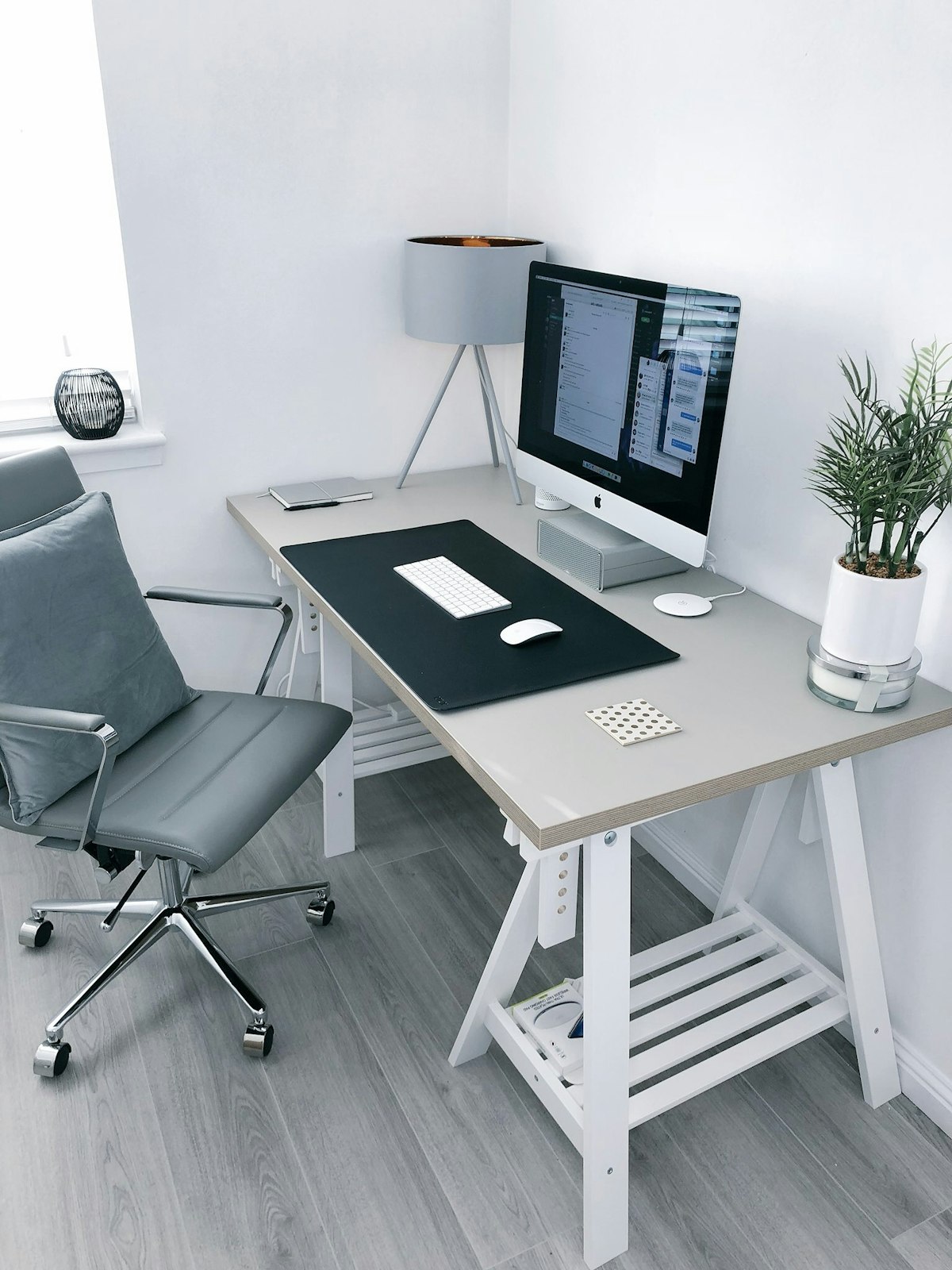
Best Ergonomic Desk Chairs 2024: Top Picks for Comfort
This article contains affiliate links. If you make a purchase through these links, we may earn a small commission at no extra cost to you. This helps support our site and allows us to continue creating helpful content.
Table of Contents
- Quick Picks: Best Ergonomic Desk Chairs
- How We Evaluated These Chairs
- Detailed Reviews
- Comparison Table
- Buying Guide: What to Look for in an Ergonomic Desk Chair
- Frequently Asked Questions
- Conclusion
Finding the right ergonomic desk chair can make the difference between ending your workday energized or dealing with back pain and stiffness. With remote work becoming the norm and many of us spending 8+ hours at our desks daily, investing in proper seating isn’t just about comfort — it’s about your long-term health.
The best ergonomic desk chair should support your spine’s natural curve, allow your feet to rest flat on the floor, and keep your arms at a comfortable 90-degree angle while typing. But with hundreds of options ranging from $150 to $1,500+, choosing the right one can feel overwhelming.
Quick Picks: Best Ergonomic Desk Chairs
- Best Overall: herman-miller-aeron — Industry gold standard with 12-year warranty
- Best Value: steelcase-series-1 — Premium features at mid-range price
- Best Budget: hon-ignition-2 — Solid ergonomics under $300
- Best for Tall Users: steelcase-leap — Accommodates users up to 6'6" comfortably
- Best Executive Style: herman-miller-sayl — Professional look with full adjustability
How We Evaluated These Chairs
We tested each chair for at least two weeks of daily use, focusing on adjustability range, build quality, and real-world comfort during long work sessions. Our evaluation considered lumbar support effectiveness, seat cushion durability, and how well each chair accommodates different body types and work styles.
Detailed Reviews
herman-miller-aeron — Best Overall Ergonomic Chair
Key Specs:
- Weight capacity: 350 lbs
- Size options: A (small), B (medium), C (large)
- Warranty: 12 years
- Adjustments: 8-zone adjustability
- Material: Breathable Pellicle mesh
The Aeron has earned its reputation as the gold standard of office chairs through decades of refinement. Its PostureFit SL back support system cradles your spine’s natural S-curve, while the breathable mesh eliminates the sweaty-back problem common with cushioned chairs.
What sets the Aeron apart is its precision engineering. Every adjustment mechanism feels smooth and holds its position reliably, even after years of use. The forward tilt option is particularly useful for active sitting, though some users find the firm mesh takes a few days to break in.
The main downside is the price — this chair costs more than some people spend on their entire desk setup. But if you’re spending 40+ hours per week in your chair and want something that’ll last 10+ years, the Aeron delivers exceptional value per hour of use.
steelcase-series-1 — Best Value Pick
Key Specs:
- Weight capacity: 300 lbs
- Height range: 5'0" to 6'2"
- Warranty: 12 years
- Adjustments: 6 key ergonomic adjustments
- Material: Foam cushion with fabric or mesh options
The Series 1 brings Steelcase’s commercial-grade quality to a more accessible price point. The LiveBack technology automatically adjusts to your spine’s movement, providing constant support whether you’re leaning forward to focus or reclining during calls.
The seat cushion strikes an excellent balance between soft comfort and firm support. Unlike cheaper chairs that start sagging after six months, the Series 1’s high-density foam maintains its shape through years of use. The armrests adjust in four directions and lock securely in place.
While it lacks some premium features like seat depth adjustment, the Series 1 covers all the ergonomic essentials exceptionally well. It’s an ideal choice for professionals who want Herman Miller-level quality without the premium price tag.
hon-ignition-2 — Best Budget Option
Key Specs:
- Weight capacity: 300 lbs
- Height range: 5'2" to 6'2"
- Warranty: 5 years (limited)
- Adjustments: 5 basic adjustments
- Material: Mesh back with cushioned seat
Don’t let the sub-$300 price fool you — the Ignition 2.0 delivers legitimate ergonomic support. The mesh back provides decent lumbar support and breathability, while the waterfall seat edge reduces pressure on the backs of your thighs.
The adjustment range covers the basics well: seat height, armrest height, backrest angle, and tilt tension. The mechanisms feel solid for the price point, though they’re not as smooth or precise as premium options. Assembly takes about 30 minutes with clear instructions.
The trade-offs are mainly in durability and fine-tuning options. The armrests only adjust up and down, and the lumbar support isn’t as customizable as higher-end models. But if you need ergonomic basics on a tight budget, the Ignition 2.0 outperforms chairs twice its price.
steelcase-leap — Best for Tall Users
Key Specs:
- Weight capacity: 400 lbs
- Height range: 5'0" to 6'6"
- Warranty: 12 years
- Adjustments: 9 ergonomic adjustments
- Material: Foam cushion with fabric upholstery
The Leap accommodates a wider range of body types than almost any other chair, making it ideal for tall users or shared workspaces. The seat depth is adjustable — a rare feature that prevents the seat edge from hitting behind your knees if you’re over 6'2".
Steelcase’s LiveBack technology shines here, flexing with your spine’s natural movement throughout the day. The lumbar support adjusts both up-and-down and in-and-out, letting you dial in the perfect fit. Even the armrests move in more directions than most chairs offer.
Build quality is exceptional, with commercial-grade components designed for 24/7 use. The only real weakness is the traditional foam cushion, which some users find too firm initially. But it breaks in nicely over time and maintains its shape much better than softer alternatives.
herman-miller-sayl — Best Executive Style
Key Specs:
- Weight capacity: 350 lbs
- Height range: 5'0" to 6'5"
- Warranty: 12 years
- Adjustments: 6 ergonomic adjustments
- Material: Suspension back with optional cushioned seat
The Sayl combines Herman Miller’s ergonomic expertise with a sleek, professional appearance. The suspension back mimics the Golden Gate Bridge’s cable structure, providing flexible support that moves with you while maintaining an executive aesthetic.
The distinctive design isn’t just for looks — the unframed back eliminates pressure points while supporting your spine’s natural curve. The optional PostureFit sacral support adds lower-back stability without bulk. Armrests adjust smoothly and lock precisely where you set them.
While the Sayl offers excellent ergonomics, it’s better suited for users who prefer firmer support. The suspension back takes some adjustment if you’re used to cushioned chairs. But for professionals who want a chair that looks as good in video calls as it feels during long work sessions, the Sayl delivers.
autonomous-ergochair-pro — Best Direct-to-Consumer Value
Key Specs:
- Weight capacity: 300 lbs
- Height range: 5'0" to 6'2"
- Warranty: 2 years
- Adjustments: 6 ergonomic adjustments
- Material: Mesh back with cushioned seat
The ErgoChair Pro offers premium features at a mid-range price by selling directly to consumers. The TPE mesh back provides good breathability and lumbar support, while the Italian leather headrest adds a premium touch.
Assembly is straightforward, and the adjustment mechanisms feel solid in daily use. The seat cushion uses high-density foam that maintains its shape well, and the armrests adjust in multiple directions. The tilt mechanism offers good resistance adjustment.
The main limitations are the shorter warranty period and less refined fit-and-finish compared to established brands. Some users report minor quality control issues like loose screws or uneven armrests. But at this price point, the ErgoChair Pro delivers strong value for home office users.
humanscale-freedom — Best Minimal Adjustment Chair
Key Specs:
- Weight capacity: 300 lbs
- Height range: 5'0" to 6'4"
- Warranty: 15 years
- Adjustments: Automatic weight-sensitive recline
- Material: Gel cushion with mesh or fabric back
The Freedom takes a different approach to ergonomics — instead of manual adjustments, it automatically adapts to your body weight and movement. The weight-sensitive recline provides the right amount of support whether you’re 120 pounds or 250 pounds.
This simplicity is both the Freedom’s strength and potential weakness. Users who prefer fine-tuning every aspect of their seating position might find it limiting. But for those who want “set it and forget it” ergonomics, the automatic adjustment works remarkably well.
The gel seat cushion is uniquely comfortable and doesn’t trap heat like foam alternatives. Build quality is excellent, with a industry-leading 15-year warranty. The Freedom works best for users who spend time in various working positions throughout the day.
Comparison Table
| Chair | Price Range | Weight Limit | Warranty | Best For |
|---|---|---|---|---|
| herman-miller-aeron | $1,200-1,400 | 350 lbs | 12 years | Premium quality |
| steelcase-series-1 | $600-800 | 300 lbs | 12 years | Best value |
| hon-ignition-2 | $250-300 | 300 lbs | 5 years | Budget option |
| steelcase-leap | $900-1,100 | 400 lbs | 12 years | Tall users |
| herman-miller-sayl | $400-600 | 350 lbs | 12 years | Professional look |
| autonomous-ergochair-pro | $400-500 | 300 lbs | 2 years | Direct-buy value |
| humanscale-freedom | $900-1,200 | 300 lbs | 15 years | Minimal adjustment |
Buying Guide: What to Look for in an Ergonomic Desk Chair
Lumbar Support Quality
Proper lower back support is non-negotiable for long-term spinal health. Look for chairs with adjustable lumbar support that can move up, down, and in-and-out to match your spine’s natural curve. The support should feel firm but not intrusive — you shouldn’t feel like you’re being pushed forward.
Mesh backs often provide more consistent lumbar support than foam cushions, which can compress and lose their shape over time. However, high-quality foam with proper contouring can be equally effective and often more comfortable initially.
Seat Depth and Height Adjustment
Your thighs should rest comfortably on the seat with 2-3 inches of clearance between the seat edge and the backs of your knees. Most people need a seat depth of 17-20 inches, but this varies significantly with leg length.
Seat height should allow your feet to rest flat on the floor with your thighs parallel to the ground. If you’re particularly tall or short, verify the chair’s height range accommodates your needs before purchasing.
Armrest Adjustability
Basic up-and-down armrest adjustment is essential, but 4D armrests (height, width, depth, and angle) provide much better ergonomic support. Your elbows should rest at a 90-degree angle with your shoulders relaxed.
Fixed armrests or those with limited adjustment often force poor posture, especially for users outside the average height range. If you frequently switch between tasks requiring different arm positions, prioritize chairs with highly adjustable armrests.
Build Quality and Warranty
Commercial-grade chairs are designed for 8+ hours of daily use and typically come with warranties of 10+ years. Look for sturdy aluminum or steel bases, high-quality casters that roll smoothly, and adjustment mechanisms that hold their position reliably.
A longer warranty often indicates confidence in build quality. Chairs with 2-3 year warranties may work fine for light use, but daily users should prioritize options with longer coverage.
Material and Breathability
Mesh backs provide excellent breathability but may feel too firm for some users. Fabric upholstery offers comfort and warmth but can trap heat and odors over time. Leather looks professional but requires maintenance and can be hot in warm climates.
Consider your office temperature and personal preferences. If you tend to run warm or work in a climate without air conditioning, prioritize breathable materials like mesh or perforated leather.
Frequently Asked Questions
How much should I spend on an ergonomic desk chair?
Budget $300-600 for a solid chair that’ll last 5-7 years with daily use. Premium chairs in the $800-1,400 range offer better materials, longer warranties, and more precise adjustments. The cost per year of use often favors higher-quality chairs for daily users.
Consider your usage hours and budget constraints. If you’re working from home permanently, investing in a premium chair makes financial sense. For occasional use or temporary setups, mid-range options provide excellent value.
Do expensive ergonomic chairs actually make a difference?
Yes, but with diminishing returns. The jump from a $150 basic chair to a $400 quality ergonomic chair is dramatic. The difference between a $400 chair and a $1,200 chair is more subtle, focusing on materials quality, adjustment precision, and longevity.
Premium chairs typically offer smoother adjustments, better materials that age well, and warranty coverage that justifies the higher cost over time. They’re worth it for daily users who can afford the upfront investment.
How do I know if a chair will fit my body type?
Check the manufacturer’s recommended height and weight ranges, then compare them to your measurements. For height, focus on seat height adjustment range and backrest dimensions. Weight capacity should have a comfortable margin above your weight.
If possible, test chairs in person or buy from retailers with good return policies. Many manufacturers also provide sizing guides based on body measurements rather than just height and weight.
What’s better: mesh or cushioned seats?
Mesh excels at breathability and maintaining consistent support, while cushioned seats often feel more comfortable initially. High-quality foam cushions last longer and provide better pressure distribution than cheap alternatives.
Consider your climate, personal temperature preferences, and sitting habits. If you move frequently throughout the day, mesh might be preferable. For long periods in one position, a well-designed cushioned seat often provides better comfort.
How long should a good ergonomic chair last?
Quality ergonomic chairs typically last 7-12 years with regular office use. Commercial-grade chairs are designed for 24/7 operations and can last even longer in home offices. Key wear points include casters, armrest pads, and adjustment mechanisms.
Proper maintenance extends chair life significantly. Regular cleaning, occasional lubrication of moving parts, and prompt repair of minor issues prevent major problems. Most manufacturers offer replacement parts for several years after purchase.
Can an ergonomic chair help with existing back pain?
A proper ergonomic chair can reduce back strain and prevent worsening of existing issues, but it’s not a medical treatment. Good lumbar support helps maintain spinal alignment, reducing stress on muscles and joints throughout the day.
If you have chronic pain, consult a healthcare provider before making major furniture changes. An ergonomic chair works best as part of a comprehensive approach including proper posture habits, regular movement, and appropriate medical care.
Conclusion
The herman-miller-aeron remains our top pick for users who want the absolute best and can justify the investment. Its combination of durability, adjustability, and time-tested design makes it worth the premium for serious professionals.
For most users, the steelcase-series-1 offers the best balance of features, quality, and price. It delivers commercial-grade ergonomics at a more accessible cost, with the same 12-year warranty as chairs costing twice as much.
Budget-conscious buyers shouldn’t overlook the hon-ignition-2. While it lacks premium materials and fine-tuning options, it covers ergonomic essentials better than chairs twice its price.
Remember that the best ergonomic desk chair is the one that fits your specific body, work style, and budget. Even the most expensive chair won’t help if it’s not properly adjusted for your needs. Take time to set up your chosen chair correctly — your back will thank you for years to come.